Published on November 5, 2024 · Written by Vanessa White
Like many people who visit Ireland, I made Dublin my first stop in Ireland. I arrived at 6 AM in rainy weather and overcast skies. Many would assume the climate would be disappointing, but I was excited as I quickly adjusted to the moody weather.
In Dublin, it’s easy to get lost in your imagination, feeling like you’re a character in a James Joyce novel.
And since my roots trace back to Ireland, I felt like I was on a personal journey, learning about my heritage and the lives my ancestors would have led.
After speaking to a woman on the bus who asked if I was Irish, I felt welcomed when she followed up with an enthusiastic “Welcome home, darling!” I knew then that I was in the right place.
In this Dublin travel guide, I’ll share my personal experience by detailing everything I did on my trip to the capital of Ireland.
Top Travel Resources for Dublin
| # | Service | Best for | Why we recommend it | |
|---|---|---|---|---|
| 1 | Go City | City passes | Bundles top city attractions into one pass at up to 50% off individual tickets. | Visit site |
| 2 | QEEQ | Car rental | Compares major car rental desks and offers price-drop protection on bookings. | Visit site |
| 3 | EKTA | Travel insurance | Travel insurance with online claims, including adventure sport options. | Visit site |
| 4 | Drimsim | eSIM & data | Pay-as-you-go travel eSIM: you pay only for the data you use. | Visit site |
| 5 | AirHelp | Flight compensation | Claims compensation for delayed or cancelled flights on your behalf, for a success fee. | Visit site |
| 6 | Radical Storage | Luggage storage | Flat-rate luggage storage near stations and attractions. | Visit site |
| 7 | WeGoTrip | Self-guided tours | Self-guided audio tours for cities and museums, at your own pace. | Visit site |
| 8 | AutoEurope | Car rental | Long-established car rental broker for Europe and the UK. | Visit site |
Essential Things to Know Before You Visit Dublin
Airport
Dublin Airport (DUB) is approximately 7 km from the Dublin city centre and offers two well-organized terminals. Use Skyscanner to find flights to Dublin. I recommend taking the Dublin Express bus, the most cost-effective and time-efficient option to get to the city centre. It’s important to note that there is no direct railway link to the airport.
Transportation
Getting around Dublin is easy. See our transportation guide for tips. The easiest way to get from Point A to Point B is to use the Dublin Area Rapid Transit (DART), which includes buses, trams, and commuter rail services. The tram system effectively services the downtown core, while buses quickly bring you to the surrounding outer areas.
Health and Safety
Ireland is one of the safest countries in the world. However, Dublin is a busy and dense city, so exercise standard precautions as you would in any major city. If you need to contact emergency services, call 999 or 112. Make sure to arrange travel insurance before your trip.
Currency
Dublin is in the Republic of Ireland, part of the European Union (EU), and uses the Euro. Tipping is not expected at restaurants and pubs, though you can leave a small sum for exceptional service if you’d like.
Walkability
Dublin is a very walkable city, with most attractions within walking distance of one another. There are also plenty of pedestrian-friendly streets, including Grafton Street and Temple Bar.
Weather
Dubliners tend to experience “four different seasons within one day”, a facetious way of saying the weather can be unpredictable, shifting from sunny and warm to overcast and rainy without notice.

Best Areas to Stay in Dublin
When I travel to a new city, I firmly believe it’s essential to stay in a convenient and central area. For Dublin, staying in the city centre provides easy access to attractions, eateries, and accommodations. For budget accommodation, areas like Temple Bar and Gardiner Street offer a range of affordable options.
Temple Bar
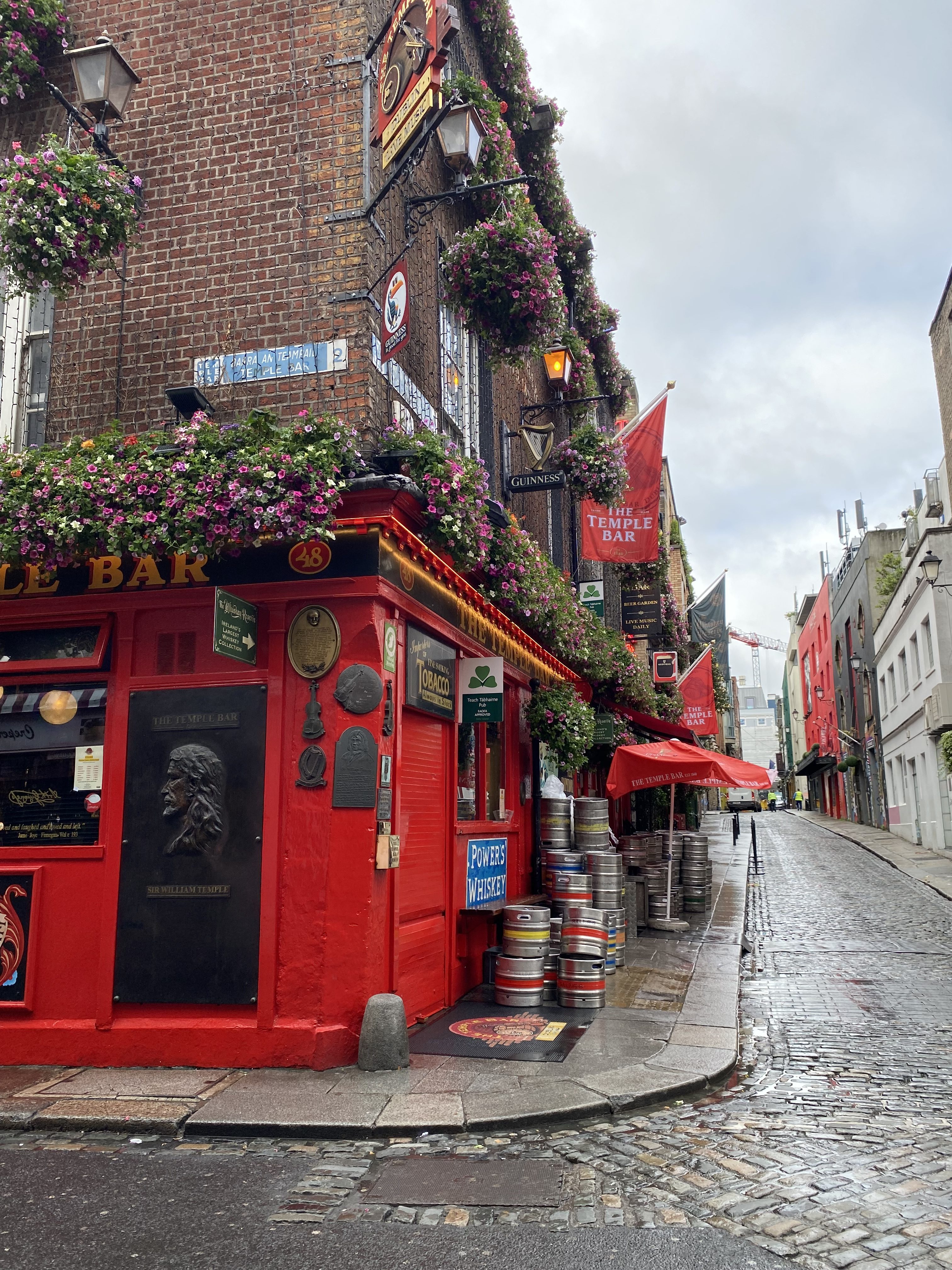
Temple Bar is a historic district with cobblestone streets, quirky vintage shops, cafes, restaurants, and, most notably, pubs. It has a fantastic nightlife, with live music played in every direction and a cold pint of Guinness waiting for you at every turn. It’s the perfect spot to stay in a central location, with most tourist attractions within walking distance.
Trinity College
Another beautiful, historic neighbourhood in the downtown core, Trinity College is known for its famous university campus, a popular tourist attraction. Though it tends to be busy, this neighbourhood has excellent shopping, cute cafes, and historic pubs.
Smithfield
In Smithfield, visitors feel nestled away from the crowded streets of the downtown core but still close enough to visit most attractions on foot, such as the Jameson Distillery. Despite its more laid-back, suburban feel, you won’t be hard-pressed to find lively pubs with fantastic live music, such as The Cobblestone pub.
Places to Visit and Things to Do in Dublin
Guinness Storehouse
The Guinness Storehouse is ranked as one of the most visited tourist attractions in all of Ireland, and for good reason. There is something here for everyone to enjoy, especially if you enjoy beer. Be prepared to spend at least 2 hours at this immersive museum, which features an excellent gift shop and a bar on the top floor.
Trinity College and the Book of Kells
Trinity College is the oldest university in Ireland, dating back to 1592. It is recognized today as a prestigious institution where great minds like Oscar Wilde, Bram Stoker, and Samuel Beckett attended. Many people who visit Trinity College also visit the Book of Kells, which represents the New Testament’s four Gospels.
Ha’Penny Bridge
Erected in 1816, the Ha’Penny Bridge is the oldest pedestrian bridge in Dublin and passes over the River Liffey. It acquired its nickname from the halfpenny toll charged until 1919.
Temple Bar
Temple Bar is a historic quarter in the centre of Dublin, named after Sir William Temple, a 17th-century diplomat. Today, you can find quirky vintage shops, lively pubs, and fantastic restaurants. Since 1840, the iconic Temple Bar Pub has been hosting excellent live music and cold craft beers.
Jameson Distillery and Teeling Distillery
If you want to grow some hair on your chest, I recommend visiting either the Jameson or the Teeling Distillery. Each provides whiskey tours, a fantastic way to learn about Irish history, traditions, and culture, while getting a little tipsy in the process.
St. Patrick’s Cathedral
St. Patrick’s Cathedral is located in the heart of Dublin and is Ireland’s largest, most important cathedral. An exceptional example of Gothic Revival architecture, it features beautiful stained glass windows, intricate stonework, and perched gargoyle statues.
Dublin Castle
Dublin Castle has served many purposes since its development in the 13th century: a defensive fortification, a royal residence, a government building, and today, a tourist attraction. If you go inside, allot a few hours to explore the Chester Beatty Library, the Chapel Royal, the Medieval Undercroft, and the Record Tower.
Live Music at Local Pubs
Some of the best live music I’ve ever experienced was in Dublin. Ireland is known for its Trad (short for traditional) folk music, which features Irish instruments such as the flute, fiddle, Uilleann pipes, and Bodhran. You can find great Trad music at The Brazen Head (Dublin’s oldest pub), The Cobblestone, and O’Donoghue’s.
Molly Malone Statue
You may have heard of Molly Malone, popularized by The Dubliners’ lyric: “In Dublin’s fair city, where the girls are so pretty, I first set my eyes on sweet Molly Malone…” A fictional character, Molly Malone was a beautiful fishmonger who died young of a fever. Legend has it that her ghost haunts the streets of Dublin, and apparently, touching her breasts will bring you good luck.

Food and Drink to Try in Dublin
Fish and Chips
Fish and chips consist of battered fried fish, usually halibut or cod, and french fries, otherwise known as “chips.” This dish originated in England but is incredibly popular throughout Ireland. Fish and chip shops are called “chippers,” but you can also get this dish at any Irish pub.
Guinness
Everyone will tell you that a pint of Guinness tastes better in Ireland, and it’s true. The dry stout carries a malty and sweet taste, with a slight bitterness from the hops and notes of chocolate and coffee.
Spice Bag
A spice bag is an iconic late-night, greasy meal you can order from most Chinese takeaway joints. It is typically served in a paper bag and consists of fried chicken, french fries, vegetables, and a blend of spices including paprika, cumin, chili powder, and garlic.
Guinness Beef Stew
This hearty meal will warm you up and keep you full. Inside the stew, you’ll find tender pieces of beef, carrots, potatoes, and Guinness, typically served with a slice of soda bread or mashed potatoes.
Coddle
Coddle is a hearty stew made with sausage, bacon, potatoes, garlic, and onions. This dish dates back to the 18th century in Dublin’s working-class communities.
Soda Bread
Soda bread is a quick-to-make bread named after the baking soda used as a leavening agent instead of yeast. It is traditionally made using flour, baking soda, salt, and buttermilk. You will likely be served a thick cut alongside your Irish breakfast.
Irish Breakfast
A beloved, salty, greasy, and hearty meal, the perfect hangover cure. Much like an English breakfast, it consists of bacon, sausage, eggs, potatoes, beans, tomatoes, mushrooms, and black pudding, served with a slice of soda bread.
Irish Coffee
Irish coffee is a cocktail made with Irish whiskey, coffee, and sugar, topped with whipped cream. My personal favourite is to substitute the whiskey for Baileys, sweet, creamy, and the perfect way to start the day in Ireland.

My Final Thoughts: Visit Dublin
Dublin was the first stop on our mother-daughter trip to Ireland. Some of my favourite memories are stumbling across beautiful, historical bars unlike any Irish pub I’ve seen back home in Toronto, and losing track of time as we sang along to our favourite Irish songs like Molly Malone and Dirty Old Town. Our Dublin trip was short, but I cherished every moment of it.

FAQs about Travelling to Dublin
Is Dublin safe?
Yes, Dublin is safe. Ireland is one of the safest countries in the world. However, Dublin is a busy and dense city, so exercise standard precautions as you would in any major city.
Is Dublin expensive?
Dublin is an expensive city. However, there are ways to cut costs without compromising your experience, with plenty of free things to do.
Is Dublin family-friendly?
Despite Dublin’s reputation as a beer drinkers’ paradise, there are many things for families to do, including the National Museum of Ireland, EPIC: The Irish Emigration Museum, Phoenix Park, Dublin Zoo, and Dublin Bay.
What is Dublin known for?
Dublin is known for its unique history, culture, and beauty, as well as Trinity College, St. Patrick’s Cathedral, Dublin Castle, traditional Irish music, and its literary heritage.
When is the best time to visit Dublin?
The best time to visit is between March and May or September and November, when the tourist season has died down and the weather is mild. St. Patrick’s Day is also a bucket-list experience.
